For metal purchase – all prices & sell directly
Stripping copper cables - is it worth the work?
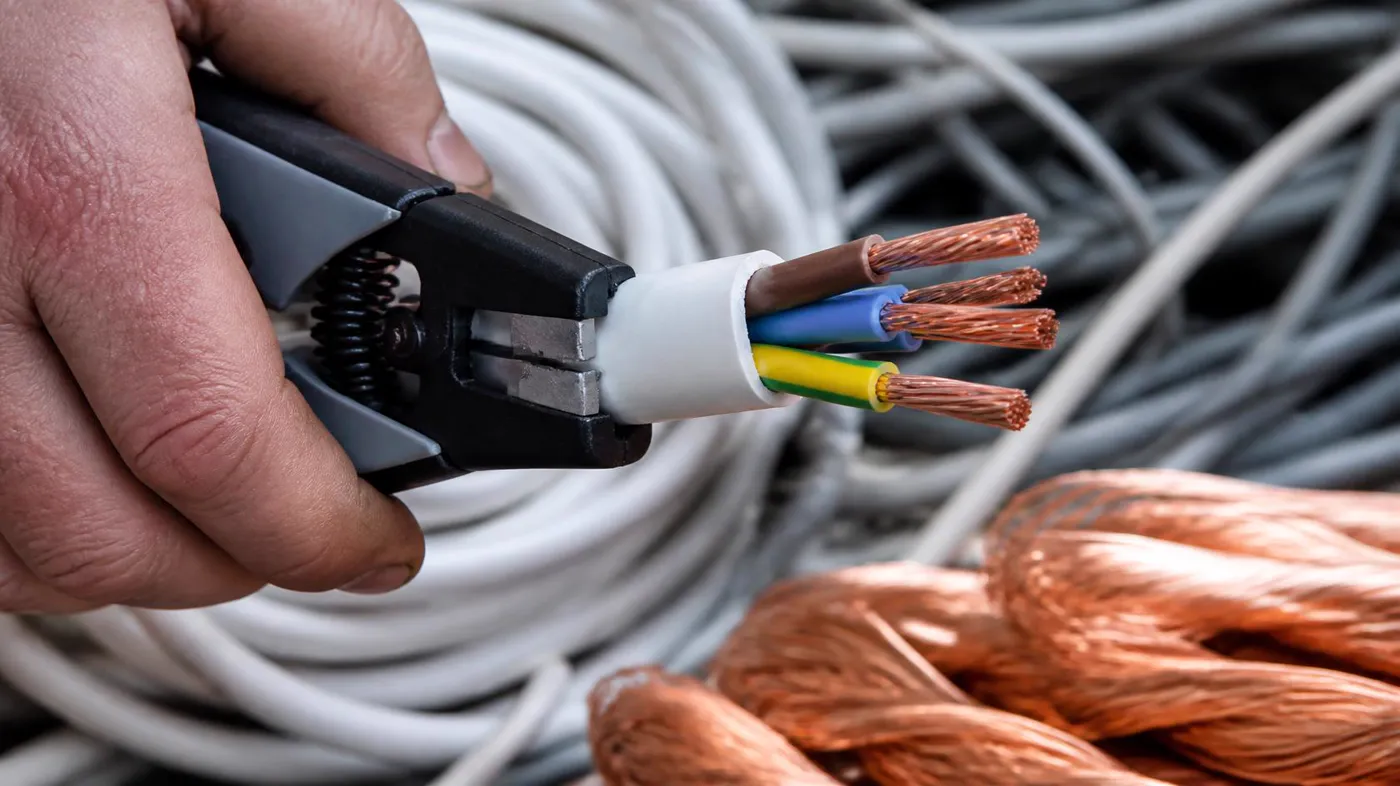
Blanker copper wire is rated higher than any isolated cable – that's the simple part of the answer. The difficult question is: Is there enough left after work that the hour was worth it? Stripping copper cables means peeling cables until the bare ladder is free, and this work takes time that no one replaces. It is not decided on the Kabelberg as a whole, but on every single cable type in it. Here the invoice is without prices – as a ratio, as a sample and as a rule of thumb, which is still true in half a year.
What actually changes in stripping
Cables are classified according to the conductor share, i.e. the weight of the copper core on the entire cable. Our list covers four stages: Copper cable approx. 70 % for strong cross-sections with thin sheathing, Copper cable approx. 60 % for NYM and installation lines, Cu cables mixed with 38 to 40 percent and Cu plug cable with around 30 percent, where plug housing and contact parts are also important.
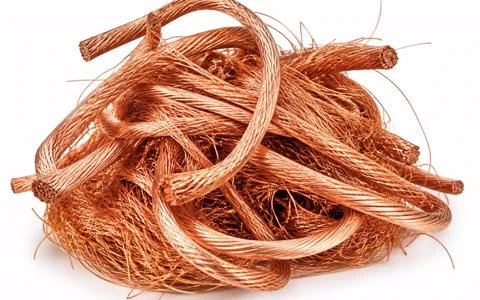
If you strip, you move the article to another kind: from the cable becomes bare wire, and bare wire is Millberry copper==References====External links== At the same time, the weight drops to the conductor part. That's where most of them are. The profit is not the jump from 70 to 100 percent, because the isolation is not paid after peeling – and before that it was not paid, but only weighed and priced into the grade. The profit is only the distance between cable type and Millberry, and this distance applies only to the kilograms left after peeling.
This follows the most important rule of thumb of the whole topic: Calculate in kilograms of bare copper per hour, not in meters per hour. Meters are the unit of labor, kilogram is the unit of payment.
How you can recognize the ladder part yourself
Six samples for which a side cutter and a magnet suffice.
Cut sample. Cut the end of the cable smoothly and look at the cut surface. How much is metal, how much plastic, fill thread and air? An inductor with thin skin shows almost only metal, a four-wire line with rope and filling barely one third. Copper is about six times denser than the plastic coating – the weight ratio is therefore always higher than what the cut surface suggests. If you want to estimate, appreciate the cut edge, not the outer diameter.
Colour sample at the edge of the cut. The red to reddish brown is copper. Silvery light and strikingly light in the hand is aluminum: this runs as Aluminium cables and not as a copper cable. If a line leads both types of conductor, it is composite and belongs to Aluminium/copper cables. Silvery outside, but red on the edge of the cut: tinned strand. It's also peeled. Light copper scrapBecause the tin layer is on the wire and doesn't go off.
Magnetic sample. Pull magnet over the coat. If it sticks, steel is stuck in the cable: belt reinforcement, wire mesh, a carrier soul in the overhead line rope or a steel band under the umbrella. Armed cables fall deeper despite strong cross-section, and when peeling each steel layer costs additional cuts.
Weight sample. Take two equally thick pieces of the same length into both hands. The much heavier one has either more copper or a lead coat. Lead is recognized by the soft, uniformly grey coat, in which the fingernail presses a lasting trace; peeled lead coat is considered as Lead billed and belongs in a separate container.
Ritzprobe on the insulation. The thumb nail presses a permanent notch in PVC. Rubber and neoprene spring back. Connected polyethylene is hard, does not take a notch and can only be cut with force. The Ritzprobe does not say anything about the copper content, but much about the time per meter – and time is the second half of this calculation.
Fracture sample on the ladder. Turn an exposed vein back and forth several times. After a few bends, a massive conductor breaks with a short, grainy fracture surface: this is single wire, and single wire can be pulled out of the coat in one piece. Fine strand bends endlessly, pushes itself together while pulling and rinsing instead of sliding. That's the difference between a handle and a quarter of an hour.
The bill: time against yield
Three sizes decide, and none of them is a price.
First, the yield. The ladder part says what's left. Ten kilograms of cables with around 70 percent conductor content become about seven kilograms of bare wire, ten kilograms of plug-in cables become three. So for the same amount of Millberry, you have to take more than twice the cable through your hand with the plug cable – for goods that require most handles per kilogram anyway.
Second, the distance. On the day of the decision, read on how far Millberry is above the respective cable type in the table Copper price ==References== The height of the distance changes daily, the order of grades does not change: from bottom to top plug cables, mixed cable, 60 percent, 70 percent, Millberry. The distance is calculated on the kilograms of bare wire you gain – not on the initial weight.
Third, time. This is the only size that no one can appreciate for you because it depends on your tool, exercise and type of cable.
Therefore, the sample instead of the estimate: Take a bundle that is typical of your stock and weigh it. Work for an hour with a clock and without interruption. Weigh the bare wire afterwards. Now you have your own number – Kilograms of Millberry per hour for exactly this type of cable. Multiply with the distance from the price table, the hourly income is there, and compare it with what your hour is otherwise worth. Two hours of effort, and the question is answered for the whole stock.
Six rules of thumb that almost always confirm the sample:
- Thicker than a pencil, solid ladder, long pieces: Peel. A longitudinal section, pull out ladder, ready. This is where the bill almost always goes.
- More veins with the same outer diameter: Each vein costs its own cuts and brings less copper. Time increases with the number of veins, the yield does not.
- Fine strand from many single wires: usually not. If the ladder doesn't go out in one piece, the bill stops.
- Pieces shorter than one arm length: not. Cut, tap and drop on the remaining piece cost the same time as on the long piece and bring a fraction.
- Multi-jacketed, armed, filled, shielded: not. Each location is a separate operation, and paper layers, jute threads and spring fleeces do nothing.
- Coil and tinned strand lacquered wire: not. Blank isn't Millberry. Coating and tinning remain, the product remains copper light.
And the half solution that often brings more than half-hearted peeling: sort. If you don't have the time, you can separate into four containers by design – plug lines, mixed cables, installation lines, strong supply lines. That's a fraction of the time. A mixed delivery is calculated according to what the mixture actually gives, and not according to the best piece in it. The overview of all cable stages according to the conductor part is on Copper cable purchase.
Tool and procedure
Cut lengthwise, not all around. A cable knife with a hook or a jacket tool pulls a seam over the whole length in one train; then the coat opens and the ladder falls out. For long single wire lines, a vice helps: clamp the end of the coat, pull out the ladder with the pliers. For regular quantities, a peeling machine is calculated – from which amount, the sample from above tells you, not the manufacturer's brochure.
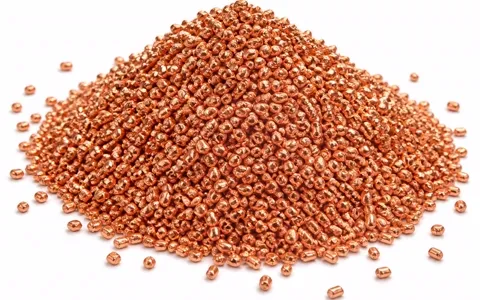
Two ways are not a shortcut. Burning is prohibited and ruins the commodity in addition: The wire comes out oxidized, russy and with glued remains and falls into the lowest copper classification – the opposite of what the peeling should achieve. Shredding without separation step Neither does it help. Copper granules is bare granules from a separation system; shredder material with plastic content remains cable scrap, only in small pieces and thus worse to test.
Which lowers the classification
With the peeled wire as with the cable, it applies: Every foreign share is on the balance without being paid – and if it cannot be sorted out, it pulls the whole grade down.
- Residual insulation, torn sheaths, adhesive tape and cable ties in peeled wire
- Coating layers of winding wire and tinning on strand: both remain copper light
- Strong oxidation and green patina on wire that has long been wet
- Steel band reinforcement, shield braids with steel content, screws in clamps and clamping boxes
- Plug housing, power supply blocks and roll-up housing: you cut them off better, they weigh heavily and contain no copper
- Lead jacket in cable delivery: belongs separately, not in the cable container
- Earth, wetness and construction debris on cables from the ground, because each gram of it is weighed
- Coiled wire together with lacquered wire or tinned strand in a bag: the mixture decides, not the intention
Choose the grade yourself at the time of sale; it is calculated according to the actual grade on the calibrated scale. That's why it is worth looking at the edge of the cut before you decide.
How cables and bare wire come to us
Three ways, Germany-wide and in the Rhine-Neckar area. Package delivery: send up to 1,000 kg throughout Germany, a maximum of 31.5 kg per parcel, the shipping label comes from us by e-mail, 6 Euro per package will be charged with the payment – this is how it works Package delivery. If you peel, you ship significantly less weight for the same amount of copper and need fewer packages; this is a small but real part of the bill. Collection: from 500 kg throughout Germany, the collection costs are staggered by distance, lie between 40 and 350 Euro and are fixed before the journey, see Collection. Delivery: Industriestraße 4, 67063 Ludwigshafen am Rhein, Monday to Saturday from 9 a.m. to 6 p.m., no appointment; further delivery points follow. What you should bring stands up Delivery. Weighing on calibrated scale, the weighing slip is yours, will be paid within 24 hours of receipt of the weighing slip. The minimum payment is 25 euros, and from 1,000 euros the money laundering law requires an ID card.
The decision on three questions
- Does the ladder go out in one piece? Take a break sample. If the answer is no, the topic is finished – then sort and do not peel.
- How many kilograms of bare wire does your hour bring? One hour sample with scale before and after. This number replaces any estimate.
- Is the delivery clean? If not, separating is the first and cheapest step, even before the first cut.
If you call us cable type and quantity, we will calculate the proceeds in advance: Request a quote. All copper grades with daily price are listed below Copper scrap and in the group Copper; further answers on cable and classification can be found in the common questions.