For metal purchase – all prices & sell directly
Recognize PCBs and sort them correctly
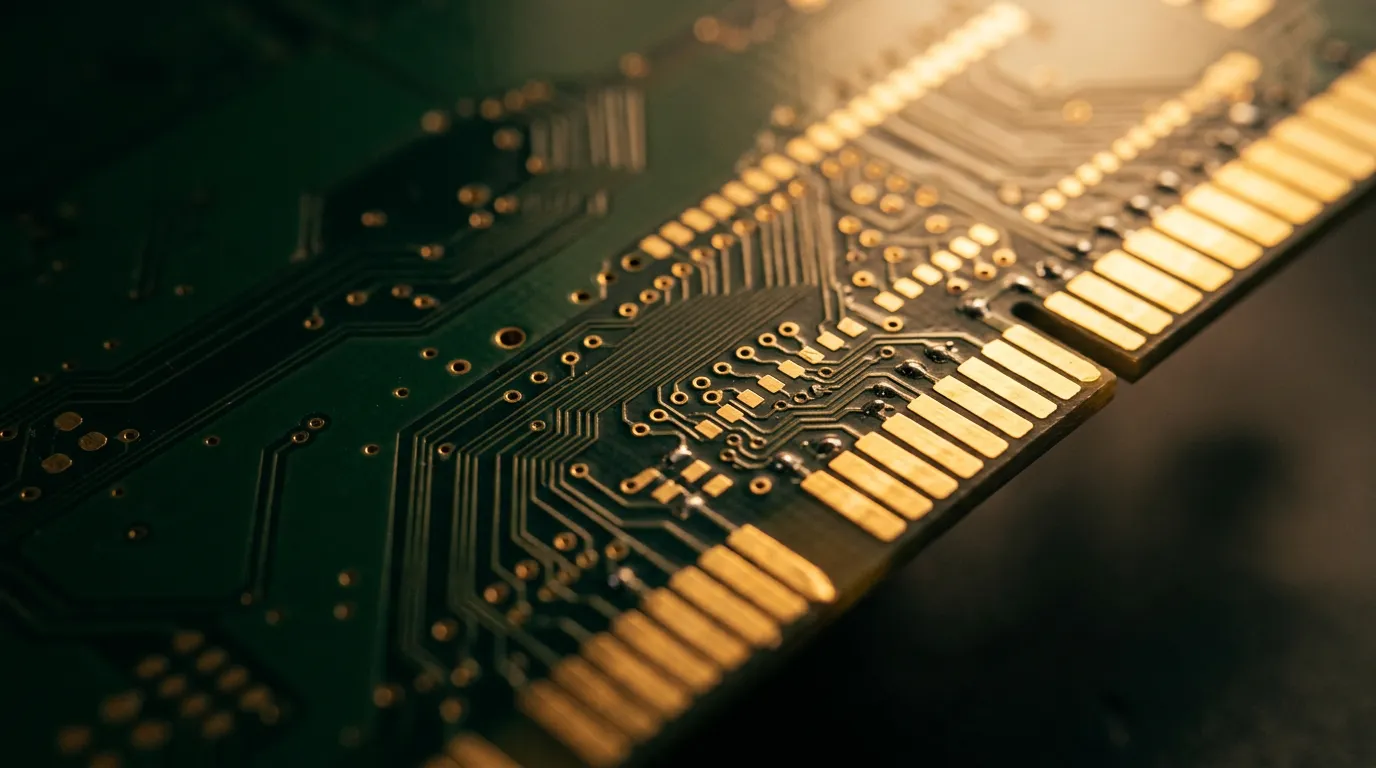
In the case of printed circuit boards, it is not the weight that decides. Two cartons can be equally heavy and still lie far apart – the one fully densely equipped control boards, the other fully large power supply boards with cooling sheet. This is why there is a need for Circuit boards not a daily price in the table, but a price after assessment. And that's why sorting here is more worthwhile than most other scrap metals. It says here which classes there are, where you can see them without tools, what the board can do and what needs to do.
The classes: in which boards differ
Retail does not sort by device type, but by assembly density – i.e. how much component sits on how much carrier surface. Four groups are sufficient for practice.
Closely stocked boards. Surfaces on which hardly any carrier plate can be seen: control systems from machines and systems, circuit boards from telephone systems and network technology, server assemblies, measurement and control technology, plug-in cards with many components. License plates are many connector strips with yellow spring contacts, ICs in black or ceramic housings, yellow contact surfaces on the board edge and a thick, multilayer substrate.
Medium assembly. Computer motherboards, graphics and plug-in cards, electronics from hard drives and drives, receiver boxes, network technology. Plenty of components, a few yellow edge contacts, many capacitors, plus sockets and sockets.
Low mounting. Large areas with little on them: power supply boards, screen and TV boards, electronics from household appliances, washing machine controls, driver boards from luminaires. Markings are thick electrolyte capacitors, large thrushes, cooling sheets, wide blank areas and often a brown-yellow paper-like substrate instead of the green fiberglass substrate.
Special cases that are not a circuit board. Boards with aluminium core made of lights and light strips: the back is bare metal, the cut edge silvery, and the weight is stuck in the aluminum – this runs over Mixed aluminium scrap. Foil conductors made of thin, amber plastic contain almost no metal. Cast assemblies, in which the components disappear under a hard resin layer, cannot be evaluated and cannot be separated.
Who can only put three cartons, puts them in such a way: dense, medium, low. That's the separation that counts.
Testable features without tools
Substrate at the fracture edge. Green, blue or black glass fibre substrate does not break smoothly: the edge is whitish and the plate can be bent before it gives in. Brown-yellow paper substrate breaks brittle and smooth with brown, shiny fracture surface and dusts. Paper substrate is a reliable sign for simple electronics and does not belong in the same carton as glass fibre boards.
Layers on the edge of the cut. Keep a cut or break edge in the light and look for fine copper lines in the cross section. Several lines mean several inner layers and thus more copper in the plate itself. A single-layered board shows traces only on one side, the opposite side is naked; held against a lamp it often shines through.
Check yellow contacts, don't believe. Edge contacts, spring strips and component legs with yellow support are a feature of densely stocked goods. The coating is always only a thin layer, never massive: Ritch an edge contact at a corner with a needle, under it red copper appears. Brass feathers, on the other hand, appear reddish-yellow and show the same colour as below in rubbed areas. Tin soldered contacts are dull grey.
Magnetic sample. Pull magnet over the board. It adheres to shielding plates, tinned steel sheet, screws, cold sheet clips and transformer cores. Everything he's got on is foreign weight and has to go. Aluminium cooling plates do not hold the magnet, but they weigh in the same way.
Weight per area. Place a board flat on the palm of your hand. A densely equipped assembly feels heavy and massive for its size, a power supply board feels empty – except for the place where the cooling sheet is located. The rule of thumb: What feels like sheet metal is weight without value.
Searching for batteries, always. On computer and control boards a button cell often sits in a holder, on controller assemblies a soldered buffer battery, in machine controls a block battery on two wires. We don't accept batteries and batteries. You must get out first – without exception, even the button cell.
What comes up and what needs to be done
Keep it up. ICs and semiconductors, plugs, sockets and sockets, resistors, capacitors, quartzes, relays, small cooled flags, empty battery holders, stickers and labels.
Must be: Housing parts made of sheet metal and plastic, shielding plates and metal frames, all screws, connecting cables and harnesses, power supplies in the sheet metal housing, fans, transformers with iron core, complete hard drives and drives, screen parts, batteries and batteries.
For the separated parts there are separate grades, and therefore the weight loss is not a throw away: plates and screws are Iron scrap, cooling sheets are used as aluminium, cut-off connection lines run as Cu plug cable or mixed cable, soldered tin and solder residues as: Tin solder. The magnets from hard disk drives are Neodymium magnets and are evaluated as printed circuit boards after verification. Composite parts such as transformers with copper winding on iron cores do not belong in a board box – specify them separately.
The limit at which the weight loss stops: What a screwdriver solves in less than a minute is solved. What soldering irons, cutting disc or violence need remains in place and is classified during the evaluation. Excluded are batteries and batteries – they must be out in any case, no matter how they sit.
The bill: how much sorting is worth
There is no kilo price, but there are four ratios that you can measure yourself.
Foreign weight. Weigh a sample of ten assemblies completely, remove sheets, screws, cables and fans and weigh again. What's missing is the proportion that you normally supply as steel and plastic weight. For assemblies made of housings, this proportion is regularly one third or more. From one third, the loss is almost always worthwhile – not because of the steel's revenue, but because a board delivery consisting of one third of sheet metal is a mixed product.
Mixture. Three classes in a bag are evaluated according to what the mixture actually gives – not according to the best board in it. Three boxes cost nothing. Sorting by placement density is the handle with the greatest effect per minute for printed circuit boards, clearly before undressing individual assemblies.
Time per piece. Measure on the sample how long it takes for each assembly to remove sheet metal and cables. Calculate this to the whole amount before you start: twenty assemblies are half an hour, two hundred are a working day. With large quantities of low-stocked goods, clean separation in classes is more worthwhile than undressing each piece.
Volume instead of weight. Boards are bulky and light. When shipping parcels, the volume is almost always limited, not the limit of 31.5 kg per package. Stack flat, component side towards back, and fill cavities with board breakage instead of paper. Small fragments and component dust belong in a closed bag, otherwise they lie on the cardboard floor and are lost when it is poured.
The following applies to the evaluation: Request the price in advance Request a quote and put a photo of the open box with it. A photo tells us more than any description, because you see and do not describe assembly density. The daily prices of all other grades are open at: Metal prices; PCBs and neodymium magnets are deliberately not there because a number of suspects would be worthless for you. All grades of this group can be found at the Non-ferrous metals.
Which lowers the classification
- Plates, sheets, frames, screws and cold sheet clips, weighing not exceeding 50 kg
- Cable harnesses and connection cables on the board: own grade, in carton only ballast
- Batteries and Batteries: we do not accept, they must be out before shipping
- Plastic housing, frames, apertures and front panels
- Casted assemblies under resin layer: inseparable, not evaluable
- Carburized or burned-out boards from claims
- Plates with aluminium core and foil conductor between the other boards
- Paper substrate mixed with glass fibre substrate: two classes in one carton
- Dust, wetness, oil and drilling chips from the workshop, because all of them are on the scales
- Loose components and fracture in the bag instead of in the bag
Choose the grade yourself at the time of sale; it is calculated according to the actual grade on the calibrated scale.
How the Boards Come to Us
Three ways, Germany-wide and in the Rhine-Neckar area. Package delivery: send up to 1,000 kg throughout Germany, a maximum of 31.5 kg per parcel, the shipping label comes from us by e-mail, 6 euros per package will be charged with the payment – the expiration is on Package delivery. For boards this is the usual way, because already a few cartons together make a meaningful amount. Collection: from 500 kg throughout Germany; the collection costs are staggered by distance, lie between 40 and 350 Euro and are fixed before the journey, see Collection. This is the way for companies with lattice boxes from manufacturing – we have done this for electrical companies. Electrical industry ==References== Delivery: Industriestraße 4, 67063 Ludwigshafen am Rhein, Monday to Saturday 9 a.m. to 6 p.m., no appointment, see Delivery; further delivery points follow. Weighing on calibrated scale, the weighing slip is yours, will be paid within 24 hours of receipt of the weighing slip. The minimum payment is 25 euros, and from 1,000 euros the money laundering law requires an ID card.
In brief
Sorting PCBs starts with four handles: detect substrate at the breakage edge, count layers at the cut edge, pull magnets over each assembly, search for any battery. Then separate into three classes according to assembly density, remove what releases a screwdriver in a minute, and leave the rest on. Further questions about boards, shipping and weighing answer the common questions.