For metal purchase – all prices & sell directly
Recycling carbide: VHM, indexable inserts and HSS distinguish
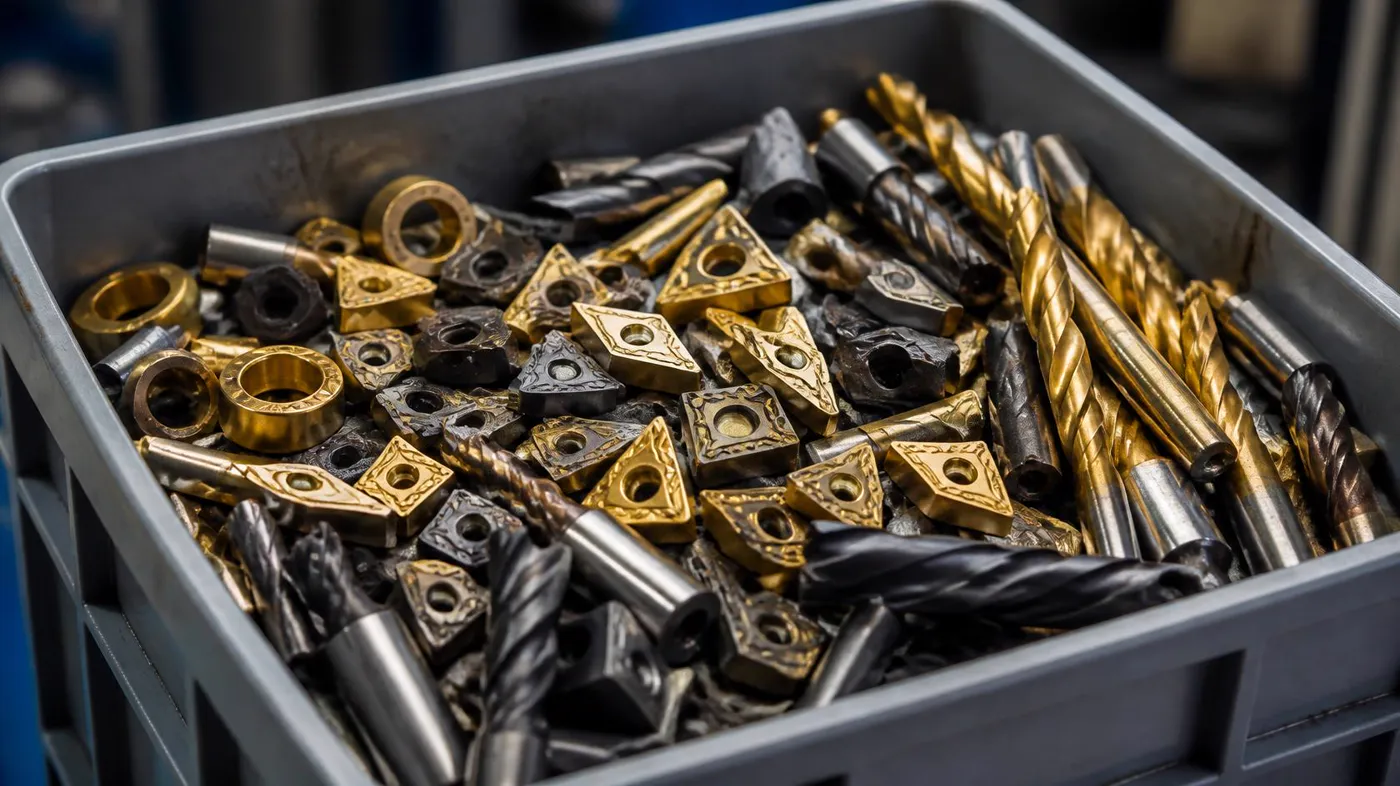
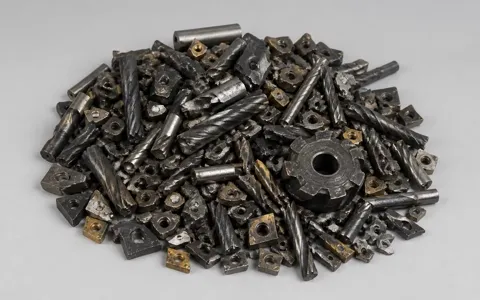
In the workshop there is a bucket: blunt drills, worn-out milling cutters, a handful of used indexable inserts, in between a few saw blades. Everything grey, everything hard, everything was expensive in shopping. This is where the most expensive defect in carbide recycling occurs — not on the scale, but when it is thrown into the container.
This article shows how you can distinguish the three groups with home appliances: magnet, kitchen scale, measuring cup and a close look at a fracture. No lab, no measuring device, no guess.
Three groups in the same bucket
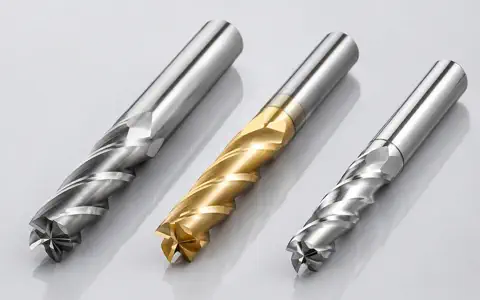
Solid carbide (VHM) is sintered tungsten carbide. The hard carbide grains are obtained from a Cobalt binder The average share is about 6 to 12 percent cobalt. The tungsten and cobalt are the reason for the value — not the cutting geometry, not the brand and expressly not the coating. These include drills, milling cutters, reamers, sinkers, threaded cutters and rod residues of the same type: Solid-carbide drills.
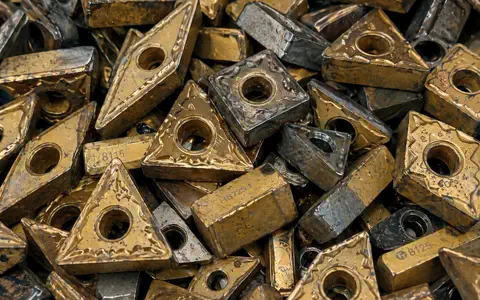
Turntables are the same material system in plate form, called WSP in operation. They lie as their own grade, because they are pure and in large quantities: Widia indexable inserts.
HSS is steel. High alloy tool steel with tungsten, molybdenum, vanadium and often cobalt, hardened but in core steel. This results in spiral drills, milling cutters, threaded drills, cutting irons, clearing needles, turning steels and metal saw blades: HSS high-speed steel.
Why the separation is more important than the quantity: A container with both in it is classified according to the weaker grade. If you sort, you don't sell more pounds — you sell the same kilograms in the right sort. Those who cannot or do not want to sort choose honestly Mixed carbide scrap and knows what he's at.
The weight is the proof: density decides
All optical features are indications. The Density is the proof, and it is the reason why you can recognize carbide without understanding it.
Solid carbide is about 14 to 15 grams per cubic centimeter. HSS is around 8, ordinary steel at 7.85. So carbide is almost twice as heavy as steel of the same size — not a fine difference, but a factor that the hand feels.
The comparison in two hands
Take two equally thick drills, one in each hand. The VHM drill is full, almost unpleasantly heavy in the hand; the HSS drill seems empty next to it. For indexable inserts, the effect is even clearer because the volume is small: A plate of the size of a thumb nail weighs noticeably more than the eye expects.
The comparison only works with similar form. A short thick HSS cutter against a thin long VHM drill says nothing.
The measurement with scale and measuring cup
If you want to know exactly, you need ten minutes and no workshop equipment:
- Wipe the tools dry, drain oil and emulsion.
- Weigh on the kitchen scale, for example, 500 grams.
- Fill a measuring cup up to a clear mark with water, record the stand.
- Put in the tools, knock briefly against the cup, so that no air bubbles will hang and read off the new stand.
- The difference in millilitres is the volume in cubic centimeters. Weight divided by volume results in density.
For half a kilogram, this means that if it pushes away less than 40 milliliters, it is solid carbide. If it needs 55 to 65 milliliters, it is HSS or steel. Intermediate values mean mixing in the cup — that is exactly what you want to avoid.
Two traps: drills with internal cooling and hollow shafts hold air tight and provide too little displacement, therefore shake briefly. And chips or grinding dust float up; you better not measure them.
What the Magnet Tells — And What Not
The magnet is the most frequently misread tool in tungsten carbide. Solid carbide is: Not unmagnetic: The cobalt binder is ferromagnetic, so a magnet holds. He's only holding much weaker than HSS.
This will only be practical in comparison. Place both tools on a table and slowly pull a strong magnet over it: The HSS drill jumps at the magnets and hangs, the carbide plate follows with hesitation and can be easily removed again. A magnet that does not hold on to a turning insert indicates ceramics — further down.
On the other hand, what the magnet can do very well: fish foreign iron from a container turning inserts. Screws, clamping wedges, washers and chip residues made of mild steel remain attached to it, the plates fall off. A passage with a magnet over the open container is the fastest cleaning available.
Fracture surface, sound and sparks
Three features that don't take two minutes.
The fracture surface. A broken VHM drill shows a glassy, fine-grained, matte-grey surface, just torn off, without ridge, without deformation — carbide is brittle and breaks like ceramics. HSS first deforms: The fracture site has a covered edge, appears fibrous and lighter. A tool that bends noticeably in the vice and then breaks is not a solid carbide.
The sound. Drop the tool from twenty centimeters high on concrete or a steel plate. Solid carbide gives a high, hard, very short click — almost like glass or porcelain. HSS answers deeper and duller and sounds longer. For indexable inserts, it is enough to beat two against each other: carbide against carbide sounds bright and dry.
The spark sample. At the grinding wheel, structural steel shows a bright, yellow-white spark beam with many branches. HSS gives a short, dark red, economical beam almost without bursts — typical of high-alloy tool steel. Solid carbide doesn't spark practically. A dark, reddish dust flag is coming, and an ordinary corundum disc hardly accepts the workpiece: it slips and glows instead of grinding. Carbide is ground with diamond or green silicon carbide, all other capitulated. This observation alone reliably separates the two groups.
Why the paint of the coating proves nothing
Here most sortings go by. Coatings sit on HSS as well as solid carbide:
- Gold yellow is mostly TiN.
- Blue gray to violet is often TiCN.
- Anthracite to dark violet is typical of TiAlN or AlTiN.
- Copper, bronze or black are also available in both groups.
A gold drill is therefore no indication of carbide, but only of a coating. Conversely, a blank, unground VHM cutter is solid carbide despite lack of paint. The coating is a few micrometers thin, weighs nothing and does not lower the classification — it is just not suitable for recognition either.
Instead, read the inscription on the shaft. HSS, HSSE, HSS-E, HSS-Co5 or HSS-Co8 stand for high-speed steel. VHM, SC, Solid carbides or Carbides stand for solid carbide. If any inscription is missing, density will be restored.
Inverted inserts: the plate is carbide, the holder does not
In the case of sheetware, the value is in a small part of the total weight that comes from the machine. What does not belong in the carbide container:
- Steel cassettes and clamp holders where the plates are sitting.
- Clamping wedges, clamps, clamps and Torx screws.
- Base plates made of steel under the cutting plate — some are made of carbide itself, which is helped by the magnetic comparison.
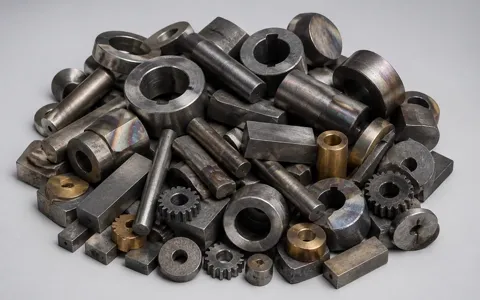
- Milling bodies, drill bars, shots, reduction sleeves, clamps.
- Killed goods: Casting steels with carbide plate on steel shaft, stone drills with carbide plates in the steel body, circular saw blades with carbide mounted teeth. This is a composite of steel, solder and tungsten carbide and is classified lower than pure grade products.
Steel parts produced are not a loss — they run as Iron scrap with above the scales, only separated.
Looks like carbide, it's not
Ceramic plates (Ceramics) are noticeably light, often black, whitish or reddish brown and completely dead on the magnet. Whoever puts it in the carbide container, will dilute the batch.
CBN and PKD plates carry a small dark tip that is soldered into a carbide body. The base body is carbide, the tip is not.
Pure tungsten — electrodes, rods, counterweights, plates — is not a carbide but a grade of its own: Tungsten. It is even heavier than solid carbide and contains no cobalt.
Heavy carbide scrap Of drawing stones, drawing nozzles, punching tools, nozzles, rollers, agitator parts or drilling crowns is not one of the types of tools but is to be classified in heading No. Solid carbide scrap.
Which lowers the classification
Concretely and in the order in which it happens in operation:
- HSS in the carbide tank. Most expensive single mistake. Two containers cost nothing.
- Cooling lubricant. Oil and emulsion weigh along, pollute the batch and run out in the carton. Drain tools and let cool dry.
- Lots and steel bodies from soldered tools.
- Screws, cassettes, clamp wedges in the plate container. A magnetic flow does it.
- Grinding sludge and sand dustmixed with water, oil and abrasion of the grinding wheel.
- Plastic handles, wooden staples, packaging, labels in the collection box.
- Ceramics between the inserts.
- Stainless steel parts In the HSS container, HSS falls towards steel scrap.
Collect separately from the start, in lockable containers, dry and labeled. Subsequent sorting from a mixed bucket takes longer than it would have cost two buckets from the beginning.
So the carbide comes to us
Because the value per kilogram is high, shipping here is calculated earlier than with any other scrap metal. You can send in up to 1,000 kg per shipment throughout Germany. The shipping label comes from us by e-mail, per package 6 euros will be charged with the payout, and per package a maximum of 31.5 kg is allowed — for carbide this limit is reached faster than it looks: one litre of solid carbide weighs about 14 kilograms, so a full bucket is far above it. Pack small, double-placed boxes, plates in solid bags, no loose bulking. The procedure is as follows: Package delivery.
From 500 kg we pick up Germany-wide with our own fleet. The collection costs are staggered by distance, are between 40 and 350 euros and are fixed before the trip. In addition to the other workshop scrap from a machining plant, carbide alone rarely reaches this limit, but quickly — which is found in such plants — is not the case. Machining.
You can deliver yourself Monday to Saturday from 9 a.m. to 6 p.m., without appointment: Industriestraße 4, 67063 Ludwigshafen am Rhein. For businesses in the Rhine-Neckar region, this is the shortest way, and anyone who comes by from the rest of the Federal Republic anyway is just as right. Further delivery points will follow. That's how things are at the farm: Delivery.
Weighing, grade, payout
Weighing on a calibrated scale, the weighing slip is yours. The initial classification is done by selecting the grade at the time of sale; it is calculated according to the actual grade. This is exactly why working with magnet and measuring cup is worthwhile before and not after.
Payment is made within 24 hours after receipt of the weighing slip, cash or by bank transfer. The minimum payment is 25 euros; from 1,000 euros the money laundering law requires an ID card. In the case of commercial delivery, we charge the tax by credit in accordance with § 14 para. 2 UStG, and in the case of scrap metal, the beneficiary owes the tax in accordance with § 13b para. 2 no. 7 UStG.
The current frame for all types of tools is shown by the Carbide price, the group's overview is available at Carbide. If you have a larger or mixed amount ahead of you and are not sure how to split it up, describe it about the Supply — with photos of the inscriptions and, if you have measured, with weight and displaced volume.